
The Glutton and the Flatterer
Vitellius came from a long line of talented courtiers, but when he gained the big job, it was a little more than he bargained for, argues Peter Stothard.

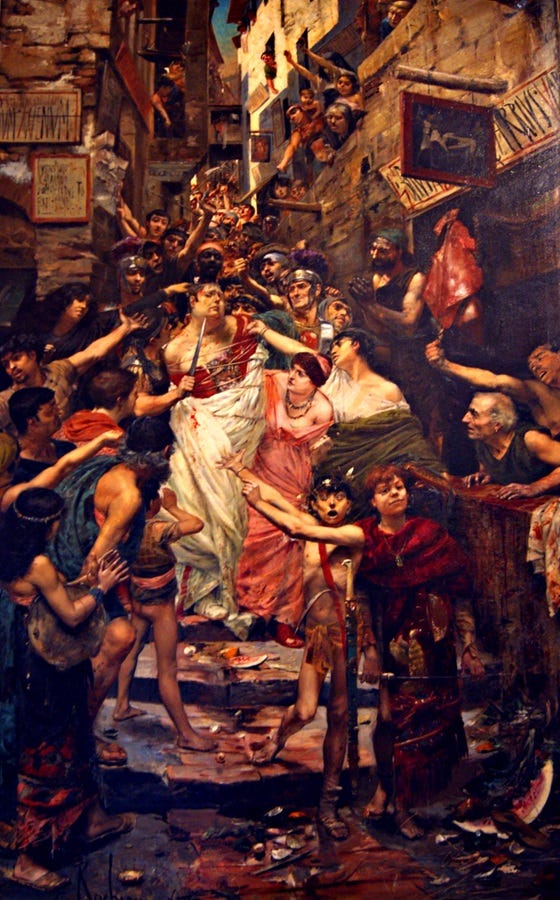
The Emperor Vitellius was not a man of whom Roman historians have ever been proud. He was one of four emperors in 69 CE, the year after the death of Nero, and was famed mainly for eating massive helpings of seafood. Since his nasty death by a thousand cuts, slowly pushed down from the Capitol hill, he has been seen mainly in art where there was need of a fat villain. But he and his family represent rather more than that, a Roman legacy to us not of literature, law or aqueducts but something more pervasive still, the birth of Western bureaucracy
They are the less than heroic heroes of Palatine, a history set inside the houses and offices of the Palatine hill, high on the edge of the Forum. It is a book about a bureaucratic family, two men in particular, a father, Lucius Vitellius and Aulus, his short-lived emperor son, also a brother and others from the chorus-line in the theatre of imperial Roman life. Many of its characters, thanks to writers over 2000 years, have been dismissed as poisoners, sexual obsessives, informers, selfish gorgers, fakes and facile toadies. But Rome, like many later cities and states for which it set the standard, lived by men and women such as these.
Palatine is a history of the big rooms seen from the small, of the top table told from the lower tables. Its events include the Roman invasion of Britain and Jewish unrest in the time of Christ but, until its final climactic year of four rivals fighting for the throne, it is a tale of peace more than war. Aulus Vitellius’s story is one of a single ruling household and of tactics for domestic times. It is a resonant story for our own times, of dimming memories of a glorious past, downwardly mobile aristocrats, sideways-moving provincials, upwardly advancing immigrants, personal excesses within the wheels of a powerful, often incomprehensible, machine.
