
Simon Sebag Montefiore on Catherine the Great & Potemkin
The acclaimed historian talks about his debut, which was an immediate bestseller and lauded by many including Mick Jagger.

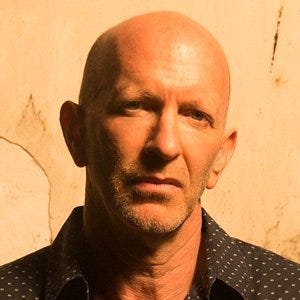
Simon Sebag Montefiore, your book Catherine the Great and Potemkin: Power, Love and the Russian Empire tells of one of history’s great couples – and love affairs. The story of Catherine and Potemkin is one of power, passion and politics – of both amorous and military conquests. Can you remember what first attracted you to the project?
I think the clue is the words of the question: the partnership of two such gifted individuals, a man and a woman, of great talent is fascinating. Their love affair itself was passionate and turbulent and devoted and romantic. It far outstrips the better-known partnership of Mark Antony and Cleopatra. Or Evita and Peron. Or Napoleon and Josephine. And we are lucky that we have the correspondence. We have thousands of letters. A remarkable archive of letters that vary from one-line erotic messages to 40-page policy discussions on war and peace. Their political partnership ranks highly too. One thinks of Augustus and Agrippa. Henry VIII and Wolsey or Cromwell. Wilhelm and Bismarck. Metternich and Franz. Louis and Richelieu. But these rarely involve a woman. And one is usually far superior to the other. What is remarkable here is that the two both possessed rare political acumen.
At Cambridge, I was studying Enlightened Despotism, brilliantly taught by professors like Beales and Blanning. Frederick the Great and Joseph II were much better understood than Catherine. But that led me to the remarkable works of Isabel de Madariaga. I noticed that Potemkin had a role far larger than powerful ministers like Kaunitz. Frederick and Joseph were obsessive control freaks who did everything themselves. Catherine and Potemkin were different but no one had examined their partnership. I planned to write a biography of Potemkin – after I had done one of Stalin. But it did not work out that way. I spent a lot of time in the Caucasus and Ukraine after the fall of the Soviet Union and both were regions where Potemkin had conquered or finessed Russian conquest and expansion. Then I became even more interested in his career… and I was so lucky that no one had thought of the idea. The archives were often unread and untouched for decades – sometimes centuries; the letters were extraordinary. The 18th century is always fun anyway but they lived on a majestic, indeed sultanic scale.
