
Robert Catesby & The Gunpowder Plot
Robert Catesby who was the driving force behind the terrorist plot to kill King James I, along with hundreds of others in the Gunpowder Plot. By Nicola Cornick.

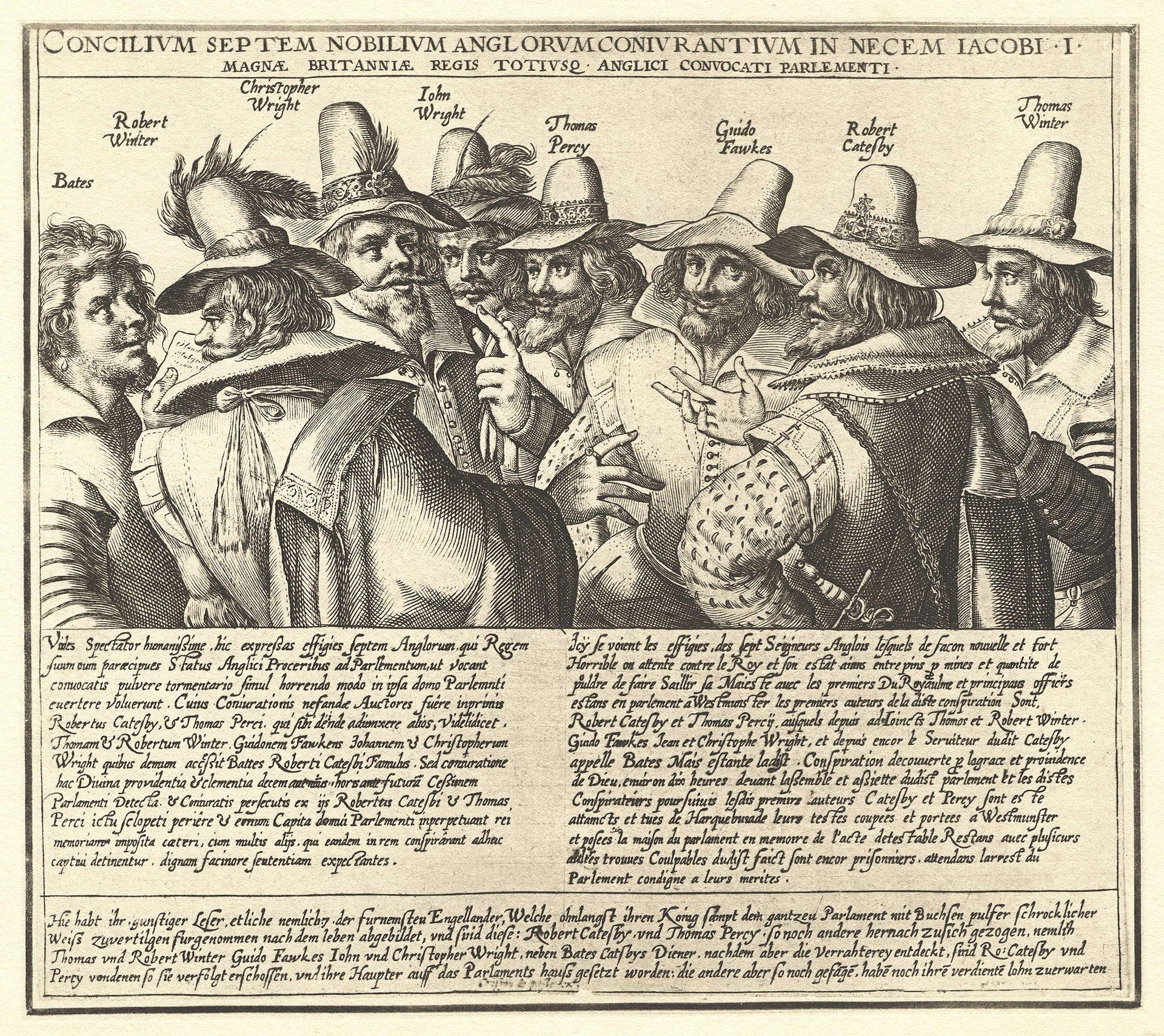
Would ‘penny for the Robert’ have quite the same ring to it? Probably not, but as Nicola Cornick demonstrates, it was Robert Catesby who was the driving force behind the terrorist plot to kill King James I, along with hundreds of others in the Gunpowder Plot.
As a public historian I am very interested in the aspects of history that we remember - and those which are largely forgotten. When I was a child, Bonfire Night was the big festival of the autumn, replete with a guy on top of the bonfire, fireworks, toffee apples and oven baked potatoes. These days it has been eclipsed by the festival of Halloween, but long before that, Robert Catesby, the ringleader of the Gunpowder Plot, was eclipsed by Guy Fawkes.
The Gunpowder Plot of 1605 was a failed attempt to blow up the English parliament and assassinate King James I. It involved a group of Catholic conspirators whose aim was to re-establish Catholic rule in England. At the same time as King James and his son and heir Prince Henry and all the peerage were blown up, Robert Catesby and a number of other prominent Catholics in the Midlands intended to kidnap Princess Elizabeth, the only daughter of James I and Anne of Denmark, and put her on the throne as a puppet Catholic Queen.
It had been James’ refusal to grant religious tolerance to Catholics that spurred the plot on but it is important to see the Gunpowder Plot in the context of the politics and religious climate of the Tudor as well as the early Stuart era. Like those Catholic plots during the reign of Queen Elizabeth I, it didn’t spring from nowhere; it was a direct consequence of the laws that denied people the right to worship freely.
