
Paul Lay on Providence Lost
When Providence Lost was first published in 2020, the 17th century had not received a huge amount of attention, and Cromwell’s reputation was not even up for debate. That’s no longer the case.

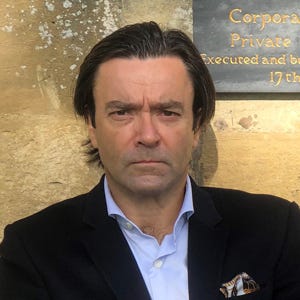
Paul Lay, your book Providence Lost: The Rise and Fall of Cromwell’s Protectorate. This has been an in vogue subject of the last few years, really, this period of the 17th century, the Civil Wars and then the Interregnum. Oliver Cromwell played rather a sort of Machiavellian role we concluded during the trial of Charles I and it’s by no means certain that Cromwell takes power in the aftermath of the execution. Would that be fair to say, Paul?
Yes, I think that’s right, and it’s a very unusual career. The trajectory that’s put Cromwell in this position where he’s on the precipice of power is an unusual one. He’s feted during the Civil Wars as a great cavalry general, a leading player in the New Model Army. But this is a man who had no military experience at all before diving in head first in his early 40s. So it’s quite extraordinary. He had no military training. He was not one of those men of the New Model Army who’d fought on the continent or anything like that. He just seemed to have a very decisive attitude towards combat that I think was partly informed by his deep belief in God and the idea of providence that he was on the right side and that God would always back the right side.
That that’s what Parliament was, that their cause was just and that God would be backing them. So he was almost reckless in part on the battlefield. But he earned a reputation as a brilliant cavalry man. He was certainly a very fine horseman. There was no doubt about that. He had an obsessive interest in horses. But he was, by the time that the second Civil War was won and the King was put on trial, he was a leading political figure. And he played a key role in putting Charles on trial and in the execution. He was one of the signatories. He was one of the regicides of the document that allowed Charles to be executed in January of 1649. And so he was prominent by that point.
Keep reading with a 7-day free trial
Subscribe to Aspects’s Substack to keep reading this post and get 7 days of free access to the full post archives.